
Active Imagination: A Practical Guide to Speaking With Your Unconscious

Your Unconscious Is Talking… Are You Listening?
There’s a whole part of you that knows what’s driving your patterns, projections, fears, and cravings. It just doesn’t speak in coherence or “rational” logic.
That part is your unconscious, and active imagination is one of the most direct, creative ways to communicate with it!
Popularized by Carl Jung, active imagination is a practice of opening an intentional dialogue between your conscious and unconscious selves.
[“The Red Book” is a great detailed resource for Active Imagination from Jung himself. Find it on my Book List here!]
What Is Active Imagination in Depth Psychology?
Active imagination is a form of symbolic dialogue. Instead of analyzing your dreams or feelings about something, you let the unconscious speak through imagery, voice, movement, or symbols.
“The goal of active imagination is to give a voice to the unconscious in a way that brings it into conscious relationship.” — C.G. Jung
The process is surprisingly simple, but not always easy- because it bypasses the part of you that wants to make sense (the logical mind and internal “psychic censor”). It’s essentially a process of summoning the parts of you that are poetic, mythic, and emotionally honest.
[READ MORE ABOUT DEPTH PSYCHOLOGY HERE]
What It’s Not:
A visualization process for manifestation
Talking to “spirit guides” or outsourcing inner authority to some outside entity
What It Is:
A creative method for uncovering truth and self-understanding
A self-dialogue with symbolic intelligence
A way to access your inner world for actionable change and self-understanding

Why Use Active Imagination?
If you’re deeply self-aware but trapped in a loop of internal noise and overthinking/endless analyzing, this process:
Cuts through narrative loops
Reveals parts of yourself that may be hiding, yet very impactful and present
Provides unexpected clarity through imagery, symbol, and feeling
Bridges intuition with integration
It’s especially useful when doing:
Dream Work
Identity shifting
Symbolic ritual or creative healing
How to Practice Active Imagination
Here’s a simple, no-BS framework to get started:
1. Create the Container
Find 20–30 minutes where you can be uninterrupted. Sit with a pen and paper, or art materials, or a voice recorder.
Set the intention:
“I’m opening a space to hear what wants to speak from my unconscious.”
2. Choose the Entry Point
You can begin with:
A dream image you remember
A recurring emotional pattern
An inner voice or peice of you (critic, child, rebel, ghost)

3. Let It Speak
Use whatever medium allows you to speak for it and to it.
Dialogue: Ask it questions and write the replies as if you're both characters.
Decipher: Pay attention to the symbols, imagery context, etc. to find hidden meaning and metaphor
Drawing: Sketch what the energy or image feels like.
Movement: Dance or posture it, then describe what it “told” you through sensation.
Ultimately this is a process of CONTACT and INQUIRY versus a “right or wrong” thing.
4. Close With a Response
Thank the part for coming to you. You can also choose to Integrate the message by writing a short response:
“Here’s what I heard. Here’s how I choose to move forward with you.”
Integration Rituals (Optional but Powerful)
Light a candle when starting and snuff it out when done to create a symbolic “container” of when this process is opened and closed
Keep a dedicated notebook or sketchbook just for active imagination entries.
Use this practice weekly and reflect on shifts in your emotions, intuition, or patterns!
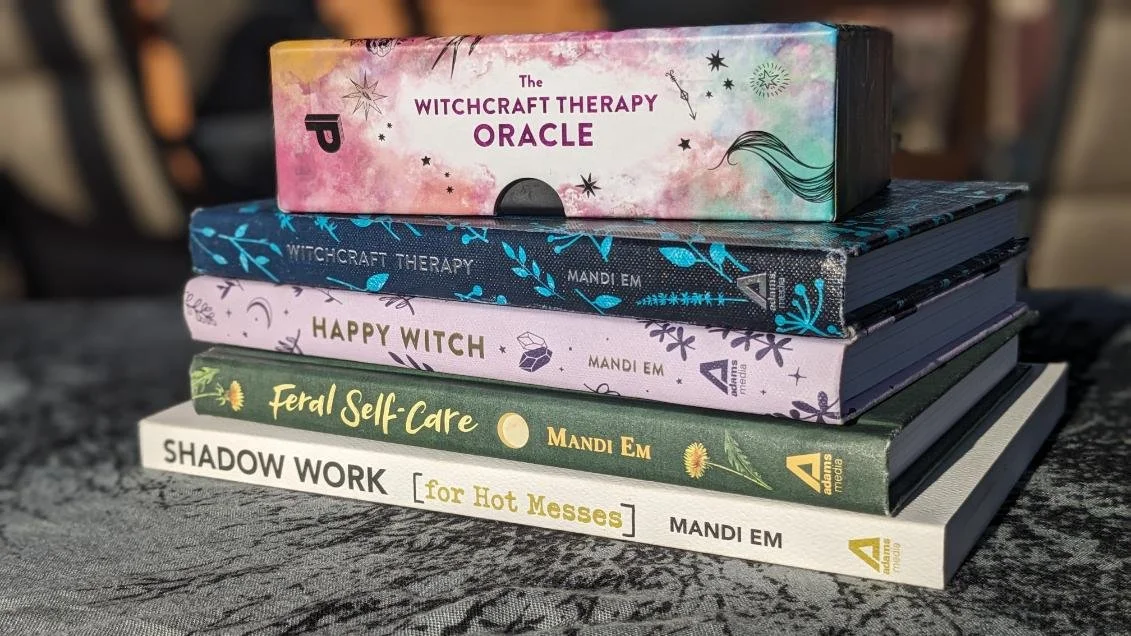
Check out my simple, fun, accessible workbook “Shadow Work for Hot Messes” HERE!
FAQ’s
What is active imagination in psychology?
It’s a method developed by Carl Jung to speak with the unconscious through symbolic dialogue using drawing, writing, or internal conversation.
How is active imagination different from journaling?
Journaling describes. Active imagination dialogues. You’re not just writing about your feelings you’re engaging with inner characters or images directly
Is active imagination safe to try alone?
Yes, if practiced with intention and grounding. If anything overwhelming surfaces, pause and revisit with support or slower pacing.